 COINNEWS
Using VPN in Russia May Become Paid Due to New
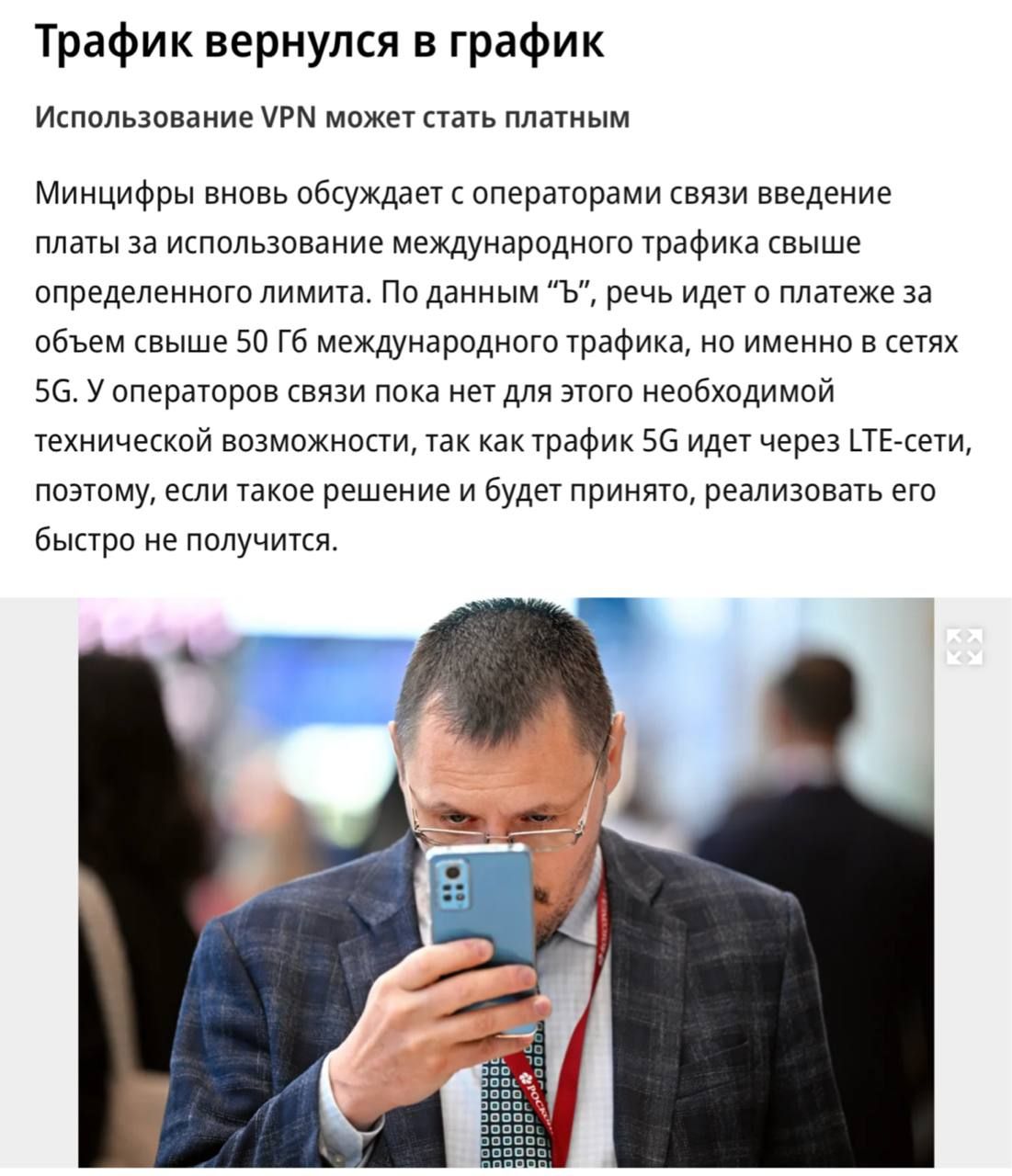
The Ministry of Digital Development proposes charging for international traffic in 5G networks
The Russian Ministry of Digital Development, Communications and Mass Media has resumed discussions with mobile operators regarding the introduction of a separate fee for using international mobile traffic in fifth-generation (5G) networks. Currently, the ministry is working out various tariff options and setting data consumption limits.
Operators point out technical difficulties in implementing new rules
Representatives of telecommunications companies note significant difficulties in implementing the proposed measures. It is difficult for operators to accurately identify which traffic is local and which is international. For example, a request to a Russian website may pass through foreign routing nodes, which is technically classified as international data exchange and falls under the new tariffization.
Experts predict an impact on a significant portion of mobile internet
Market specialists warn that the new tariff system could potentially affect not only virtual private network (VPN) services but also a significant share of regular mobile internet traffic. The introduction of fees for international connections is expected to lead to a decrease in the use of VPN services among users, although the effectiveness of this measure remains a subject of debate.
Even a request to a Russian site may pass through foreign nodes and be billed as international.
The future of mobile internet regulation in Russia
The initiative of the Ministry of Digital Development aims to optimize operators' expenses on data transit abroad. However, balancing the economic interests of business and the availability of services for end consumers requires careful analysis of the technical aspects of modern communication networks.
Key issues for the industry
The lack of a unified standard for distinguishing between local and international traffic creates uncertainty for subscribers. Experts recommend that operators implement transparent monitoring systems to avoid unexpected deductions for legitimate user activity on the network.
Further developments depend on the results of negotiations between the regulator and telecom operators, as well as on the readiness of infrastructure to support new requirements for traffic accounting.
Conclusion