 Black Triangle Channel Telegram
Scientists Restore Old Mice's Memory via Neuronal Reprogramming
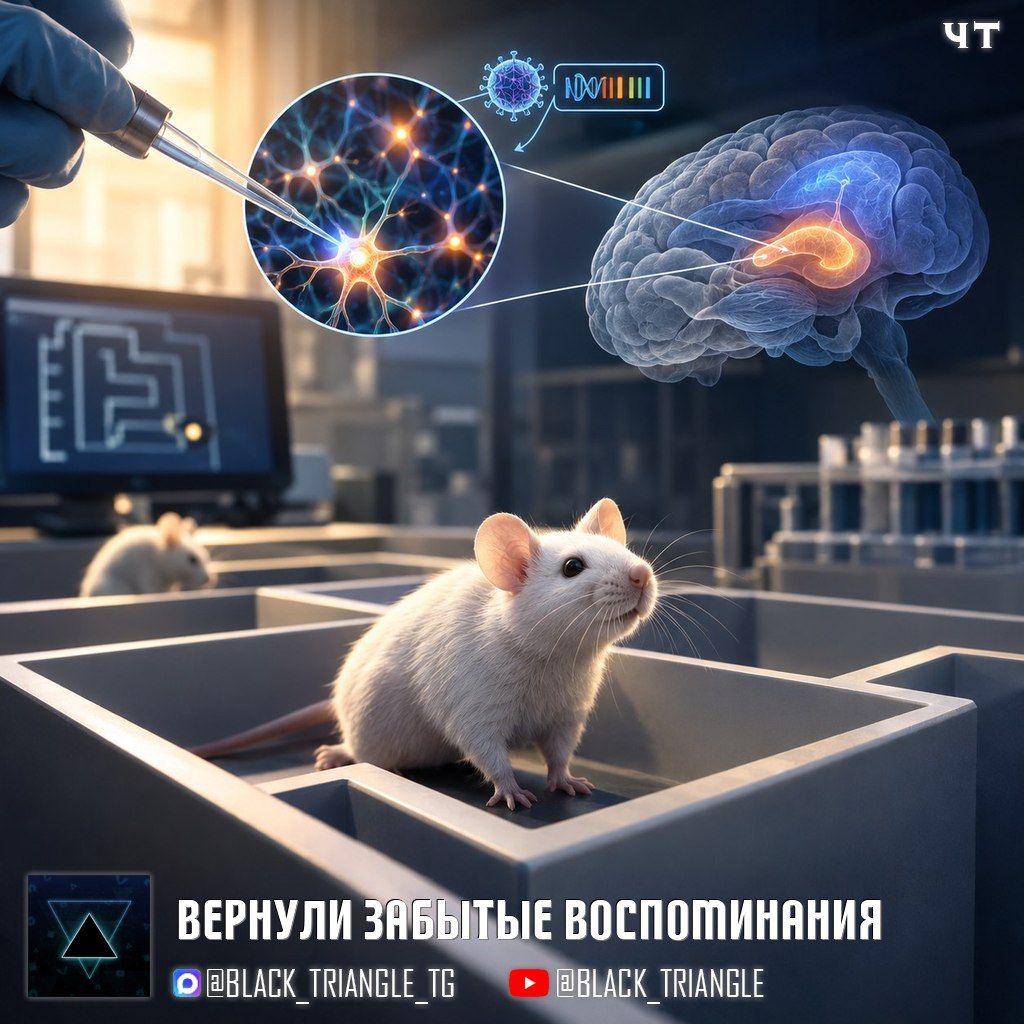
Scientists at the Swiss EPFL have learned to restore memory in old mice by selectively targeting neurons that store specific memories. This approach avoids global intervention in brain function.
Cell groups responsible for storing information are called engrams. Memory formation creates a physical trace in the brain as a specific set of interconnected neurons.
The restoration method works as follows:
- A genetic switch is delivered to target neurons using a harmless virus
- It temporarily activates three genes: Oct4, Sox2, and Klf4, known as Yamanaka factors
- These genes revert cells to a youthful state, earning their creators the Nobel Prize
- Engram neurons then function as efficiently as those in young animals
In experiments with older mice, the method targeted the hippocampus—a brain region crucial for learning and new memory formation. The animals navigated maze tests with the same success rate as younger specimens.
Particular interest was sparked by results from prefrontal cortex stimulation. Mice regained skills acquired in youth but previously lost, proving the method's effectiveness for long-term memory.
The technology's key advantage lies in its precision. Only a tiny brain area is affected, gene activation is temporary, and cells continue functioning normally post-procedure.
Simultaneous whole-brain reprogramming remains too risky. While human application is distant, memory aging is now viewed as correctable rather than irreversible.
8.2K views