 Social Engineering
History of the Numeric Keypad on Keyboards
The numeric keypad (NumPad) on personal computer keyboards became an integral part of the interface due to the historical development of computing technology. Its appearance was driven by the need to speed up routine number entry.
History of the Numeric Keypad
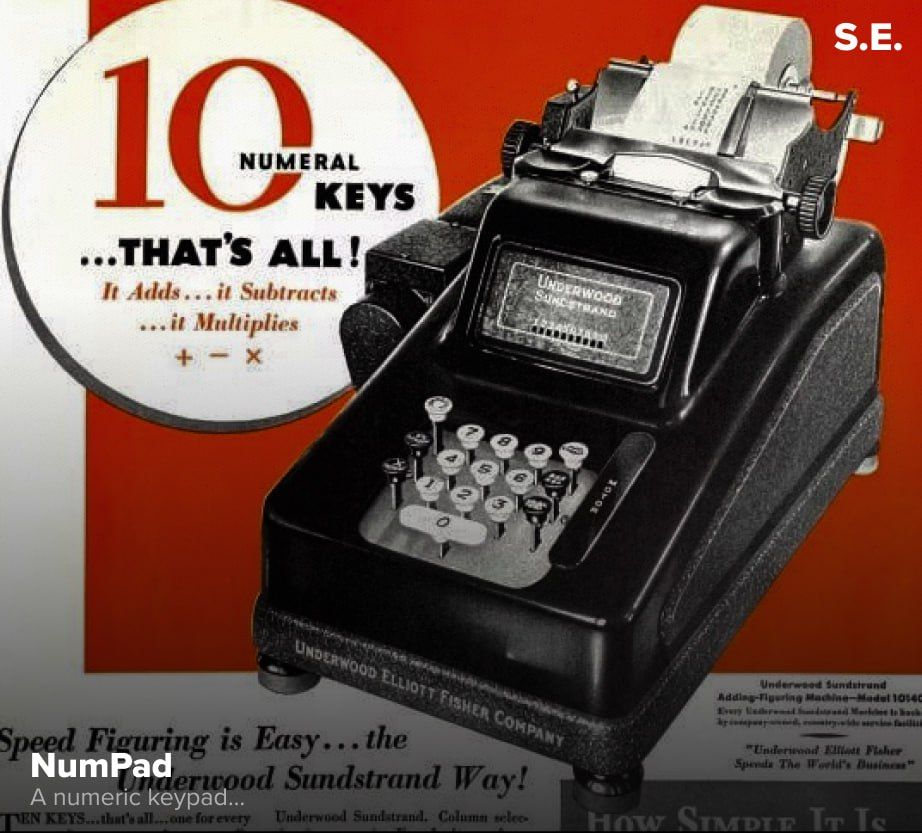
The prototype of the numpad was a mechanical calculating machine invented by Swedish engineer David Sundstrand more than a hundred years ago. He patented the world's first machine with a ten-key layout, which proved simpler and faster than its analogs.
After the patent expired, this design was copied by competitors and by the 1950s had become an industry standard for desktop calculators.
In the 1960s, the layout moved to electromechanical devices, and in the 1970s to early personal computers such as the Commodore PET and Sol-20.
A key milestone was the release of the IBM Model M keyboard in 1984. Engineers added the Num Lock key, giving the numeric keypad dual functionality: entering numbers or navigating through text.