 Social Engineering
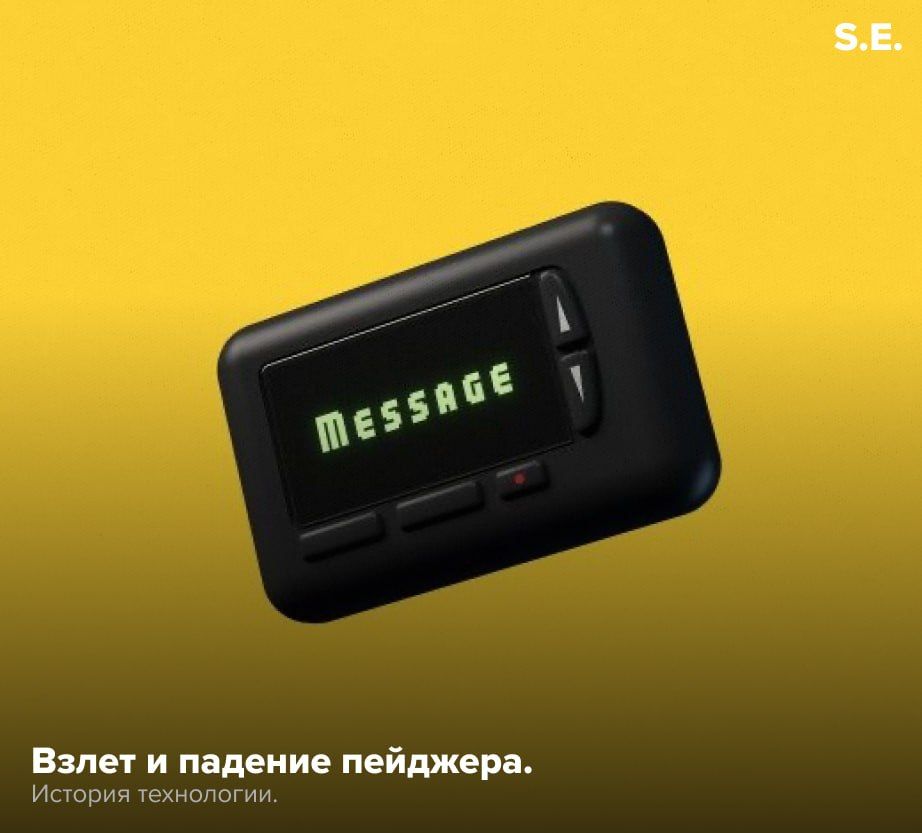
History and Technology of Pagers
Before the advent of smartphones, pagers were the primary means of instant communication, laying the foundation for text-based interaction.
History and Popularity
The first pager was introduced by Motorola in 1956, gaining widespread popularity in the 1980s. At its peak, over 163 million people worldwide used these devices.
In the 1990s, Moscow and St. Petersburg had hundreds of thousands of subscribers, with more than 400 operators serving the entire Russian market. In the US, the industry's turnover reached $6.2 billion by 2003.
Iconic models of that era included the Motorola Bravo and Advisor. A pager was not only a tool for urgent communication but also a fashionable accessory accessible to broad segments of the population.
How the Technology Works
Devices operated on a single radio frequency using the POCSAG digital protocol, developed in the late 1970s. Each device was assigned a unique identifier — a RIC or CAP code.
The base station encoded messages into packets consisting of a preamble, sync word, and frames of 64 bits. The device remained in sleep mode most of the time, waking up for fractions of a second to check addresses.
Advanced FLEX networks offered higher data transmission speeds. The system allowed addressing groups of subscribers and even supported two-way communication via the ReFLEX standard.
Reasons for the Industry's Decline
The GSM standard and the rise of SMS erased the advantage of pagers. Mobile phones provided two-way communication and instant reply capabilities, which classic devices could not offer.
The emergence of MMS, emojis, and the internet made communication richer. Black-and-white pager screens with limited character sets looked outdated compared to the color displays of smartphones.
Economic factors also played a key role: mobile service prices fell while GSM coverage expanded. If there were 60 million devices in operation in the US in the early 2000s, that number dropped to 5 million by 2005.
Today, pagers survive only as a backup communication channel in medicine, emergency services, and industry in case of mobile network outages.