 Black Triangle Channel Telegram
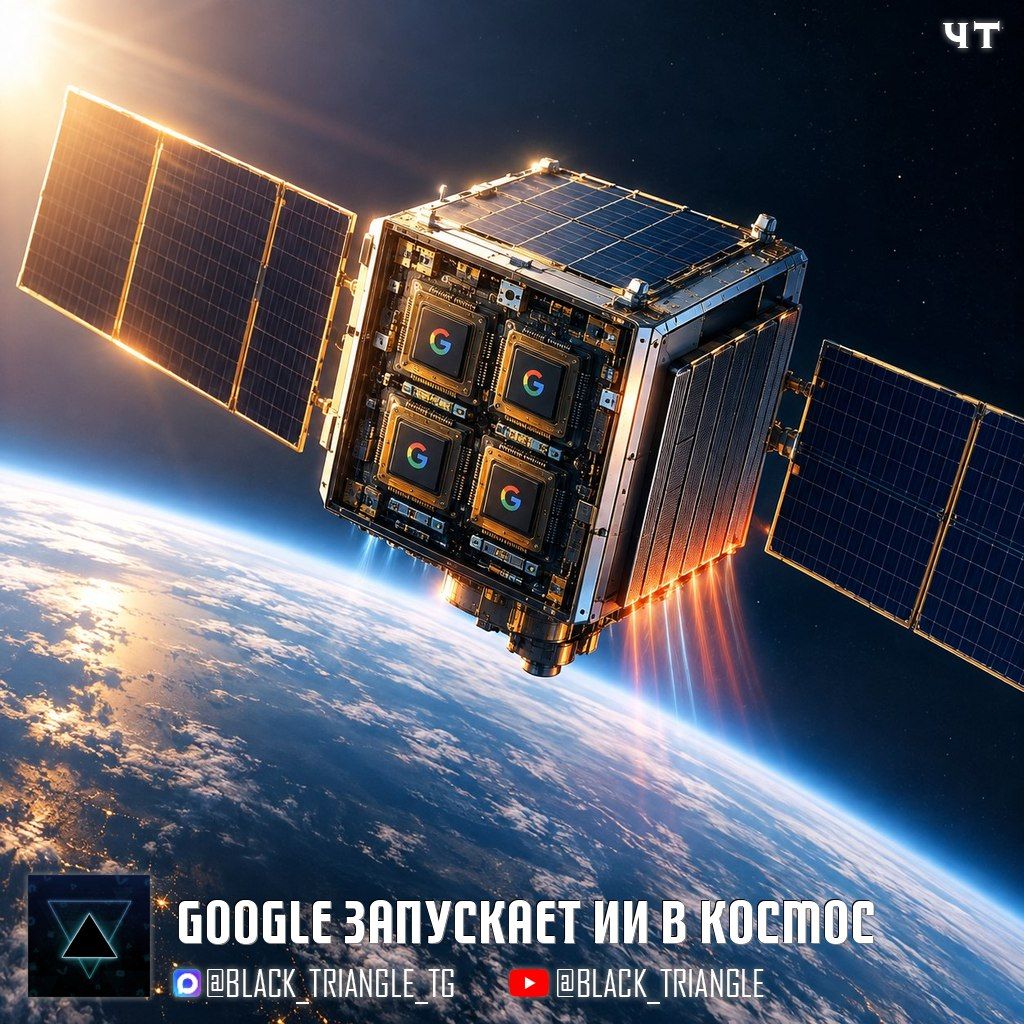
Google launches the first AI satellite Suncatcher into orbit
Google launches the experimental Suncatcher satellite with an AI server into orbit. The device uses solar energy to operate tensor processors in space conditions.
Technical specifications and limitations
The satellite is equipped with four Tensor Processing Units (TPUs) and solar panels with a total power of 1000 watts. The cooling system dissipates heat into space via infrared radiation, as vacuum conditions prevent the use of air or liquid cooling.
Key technical features of the project include:
- Four TPU chips for training and running AI models
- Solar panels with a total capacity of one kilowatt
- Radiators for heat dissipation via infrared radiation
- Periodic reboots to combat radiation-induced errors
Due to low thermal efficiency, the chips operate for about 15 minutes before shutting down due to overheating. The structure's power output is comparable to that of a single ground-based server.
The satellite will process requests for one year, then remain in orbit for another six years before burning up in the atmosphere. In the long term, the company plans to create a constellation of more than 80 satellites.
Head of Research James Manyika acknowledges that real-world results are not expected soon. Transitioning from four chips to a full-scale data center will take about 15 years.